Table of Contents
"Can you really make money with AI?" "Where do I even start?" — These are the questions we hear all the time.
The short answer: if you use AI tools effectively, earning $300 to $1,000+ per month as a side income is entirely realistic, even with no prior experience. For those who already have marketable skills, it's not uncommon to scale to $3,000+ per month and eventually go full-time.
This guide covers everything from choosing your niche to specific tools, finding clients, and avoiding common pitfalls — at a level of detail that lets you take action today.
Why "AI Side Hustles" Are Booming Right Now
The reason is simple: AI has dramatically expanded the range of work a single person can handle.
3 Things AI Has Changed
- Lower skill barriers: You can build a website with no coding experience. You can generate professional-quality images with zero design background.
- Faster output: Article drafts, code generation, translations — AI makes these 10x faster, so you can produce meaningful work even in your spare time.
- Near-zero startup costs: Most major AI tools offer free plans. All you need is a computer and an internet connection.
In short, work that used to require hiring a specialist can now be done by individuals with the help of AI — that's the essence of AI side hustles.
5 AI Side Hustle Categories & Earnings Estimates
There are many types of AI side hustles, but here are the five with the highest demand.
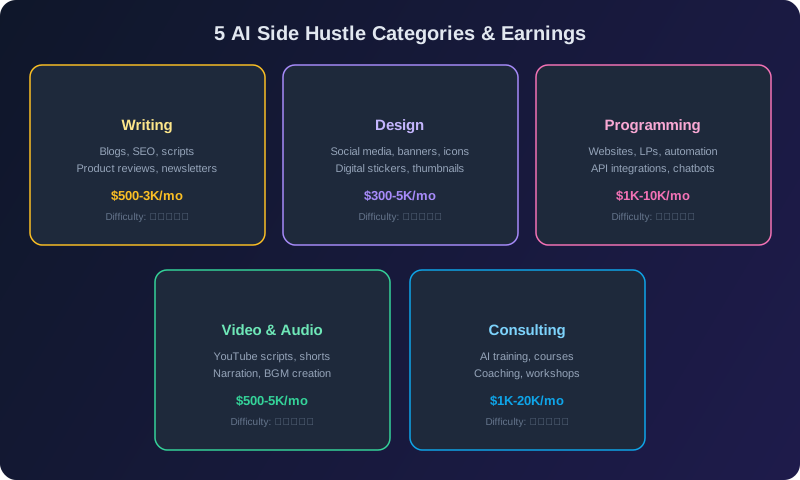
1. Writing ($500–$3,000/mo)
This is the easiest category to break into. The basic workflow is generating drafts with ChatGPT or Claude, then enhancing and editing them with your own knowledge and expertise.
Example projects:
- SEO blog posts ($30–$150 per article)
- E-commerce product descriptions ($5–$30 each)
- YouTube scripts ($50–$200 per script)
- Email newsletter writing ($100–$500/month retainer)
The key is to never deliver raw AI output. Clients aren't paying for generic AI-generated text — they're paying for quality content that incorporates domain expertise and matches their brand voice. Use AI as a drafting accelerator, not a replacement.
2. Image & Design ($300–$5,000/mo)
Use Midjourney and Canva AI to create social media graphics, ad banners, icons, digital stickers, and more.
Example projects:
- Social media image sets (10 images for $50–$200)
- Banner ad design ($30–$100 each)
- Digital sticker packs (revenue varies)
- Blog and article featured images ($10–$50 each)
Even without design experience, you can achieve commercial quality by generating images with AI and refining them in Canva. Establishing your own visual style helps attract repeat clients.
3. Programming ($1,000–$10,000/mo)
AI coding tools dramatically accelerate development speed. Website and landing page development are high-demand, high-value niches.
Example projects:
- Website development ($500–$3,000 per project)
- Landing page design ($300–$1,500 per project)
- Business automation tools ($500–$5,000 per project)
- Custom chatbot development using APIs ($1,000–$5,000 per project)
For details on AI coding tools, see our Claude Code vs Codex comparison. If you already have programming experience, AI can boost your productivity 2–5x.
4. Video & Audio ($500–$5,000/mo)
AI-generated YouTube scripts, AI voice narration, AI-edited short-form videos — the video and audio space is seeing rapid AI adoption.
Example projects:
- YouTube scripts ($50–$200 per script)
- Short-form video production ($10–$50 per video)
- Podcast editing ($30–$100 per episode)
- AI background music creation & licensing ($10–$50 per track)
5. Consulting & Education ($1,000–$20,000/mo)
Teaching others how to use AI is a business in itself. However, this requires having real results from using AI yourself first.
Example projects:
- Corporate AI training workshops ($500–$3,000 per session)
- Online AI prompt engineering courses ($500–$5,000/month in sales)
- One-on-one AI coaching ($100–$1,000/month per client)
We recommend building a track record in categories 1–4 before moving into consulting.
AI Tools for Side Hustles
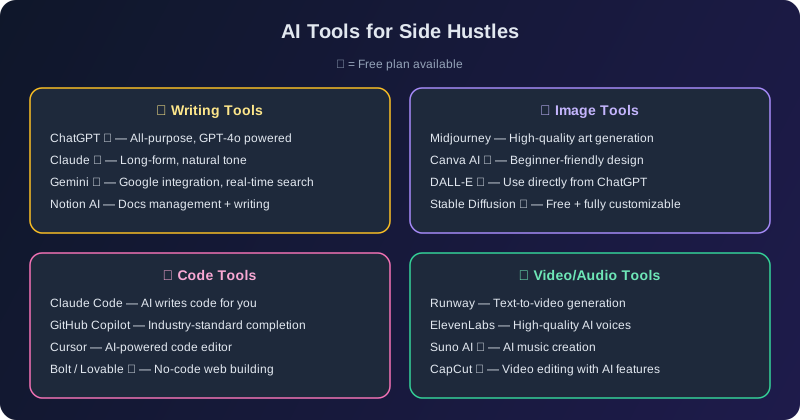
Different side hustles call for different tools. The smart approach: start with free plans and upgrade to paid once you're earning consistently.
Writing Tools
| Tool | Monthly Cost | Best For |
|---|---|---|
| ChatGPT | Free – $20/mo | Article drafts, brainstorming, research |
| Claude | Free – $20/mo | Long-form writing, nuanced and natural tone |
| Gemini | Free – $20/mo | Google Search integration, current information |
| Notion AI | $10/mo+ | Combines document management with writing |
For a detailed pricing comparison, check out our Claude vs ChatGPT pricing comparison.
Image Tools
| Tool | Monthly Cost | Best For |
|---|---|---|
| Midjourney | $10/mo+ | High-quality art and illustration generation |
| Canva AI | Free – $13/mo | Social media graphics, presentations, banners |
| DALL-E | Included in ChatGPT | Quick image generation directly from ChatGPT |
| Stable Diffusion | Free (local) | High-volume generation, full customization |
Code & Development Tools
| Tool | Monthly Cost | Best For |
|---|---|---|
| Claude Code | Usage-based | Having AI write code for you |
| GitHub Copilot | Free – $10/mo | Code completion, test generation |
| Cursor | Free – $20/mo | AI-powered code editor |
| Bolt / Lovable | Free+ | No-code website and app building |
Video & Audio Tools
| Tool | Monthly Cost | Best For |
|---|---|---|
| Runway | Free – $12/mo | Text-to-video generation |
| ElevenLabs | Free – $5/mo | High-quality AI voice synthesis and narration |
| Suno AI | Free – $10/mo | AI music and BGM creation |
| CapCut | Free+ | Video editing with AI features |
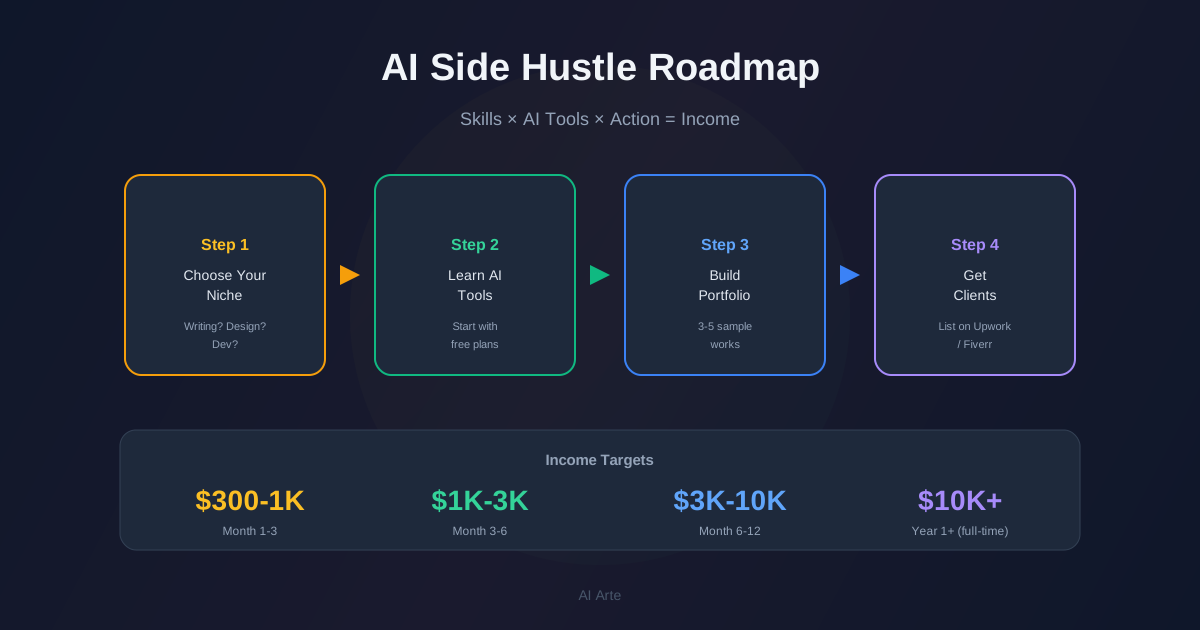
4 Steps to Start Your AI Side Hustle
If you're not sure where to begin, here's the fastest path in 4 steps.
Step 1: Choose Your Niche
Start by deciding what you can offer.
- Good with words → Writing
- Interested in visuals → Image & Design
- Have coding experience → Web development & automation
- Deep knowledge in a specific field → Content creation in that niche
Even if you think you have nothing to offer, the industry knowledge from your day job is a genuine asset. For example, real estate expertise + AI writing = "specialist real estate SEO writer" — a unique position that sets you apart.
Step 2: Learn the AI Tools
Pick the tools that match your niche and start by using the free plans extensively.
- Sign up for the free version of ChatGPT or Claude (takes 5 minutes)
- Experiment with prompts related to your chosen niche
- Learn how to improve output quality (specific instructions, clear constraints, iterative feedback)
Understanding how generative AI works will make you significantly better at using these tools.
Step 3: Build Your Portfolio
To land actual projects, you need sample work that shows what you can deliver.
- Create 3–5 sample deliverables based on hypothetical briefs
- Showcase your work on a personal blog, Medium, or portfolio site
- Emphasize "quality and speed" rather than leading with "I use AI"
The key is to make your samples polished enough that a client would want to hire you. A portfolio full of low-quality, mass-produced AI content will backfire.
Step 4: Start Landing Projects
Once your portfolio is ready, start looking for work on freelance platforms. Accept lower rates at first to build your reputation — once you have strong reviews, raise your prices.
How to Find Clients & Platforms
Here are the major platforms where you can find AI side hustle work.
Freelance Marketplaces
| Platform | Features | Best For |
|---|---|---|
| Upwork | Largest freelance marketplace. Strong in writing, development, and design | Those who want to browse and apply for specific projects |
| Fiverr | Service-based marketplace where you list your offerings. Global reach | Those who prefer clients to come to them |
| Freelancer | Contest and project-based system. Wide variety of categories | Those who want to compete on specific briefs |
Skill-Sharing & Digital Sales
| Platform | Features | Best For |
|---|---|---|
| PeoplePerHour | Freelance marketplace focused on creative and tech services | Those who want to sell services on their own terms |
| Gumroad / Etsy (Digital) | Sell digital products: templates, assets, tools | Those who want to create once and sell repeatedly |
| Medium / Substack | Publish paid articles, newsletters, and educational content | Those who want to monetize knowledge through writing |
Tips for Landing Projects
- Highlight specific results in your profile: Include concrete numbers like "50+ SEO articles written using AI-assisted workflow"
- Include samples in every proposal: Always link to your portfolio
- Accept lower rates for your first 3 projects: Great reviews are your best marketing tool
- Aim for repeat clients: Deliver work along with improvement suggestions to earn ongoing contracts
3 Common Beginner Mistakes
Mistake 1: Delivering Raw AI Output
Submitting AI-generated text or images without editing is the biggest mistake you can make. Your clients can get raw AI output themselves. They're hiring you for the quality control, domain expertise, and understanding of their specific needs that AI can't provide.
AI is a drafting tool. The final quality must come from your own hands.
Mistake 2: Spreading Yourself Too Thin
Offering writing, design, and programming all at once usually means you'll be mediocre at everything. Focus on one category and build a strong track record first.
Mistake 3: Overspending on AI Tool Subscriptions
Subscribing to too many paid plans can eat into your earnings before you've made any. Start earning $300–$1,000/month on free plans before upgrading to paid tiers.
Taxes & Legal Essentials
Track Your Income and Expenses
Freelance side hustle income is generally taxable. Keep records of all income earned and business expenses — including AI tool subscriptions, computer costs, and internet fees. These may be deductible. Check your local tax authority's guidelines for reporting thresholds and requirements, as they vary by country and region.
Check Your Employment Contract
Some employers have policies restricting or prohibiting side work. To avoid potential issues, review your employment contract or company handbook before starting.
Copyright Considerations
Copyright law around AI-generated content is still evolving in many jurisdictions. Image generation AI in particular carries a risk of producing outputs that resemble existing copyrighted works, so exercise caution when using AI-generated content commercially.
Summary
- Now is the time to start an AI side hustle. The barriers to entry are lower than ever, and startup costs are near zero.
- Focus on one category first. Writing, design, programming, video, and consulting are the five most promising fields.
- Start with free AI tools. ChatGPT, Claude, and Canva AI all have free plans that are more than enough to get started.
- Never deliver raw AI output. Adding your own expertise and quality control is what sets you apart.
- Portfolio first, then clients. Create 3–5 solid samples and list your services on Upwork, Fiverr, or other freelance platforms.
An AI side hustle isn't about "easy money" — it's about using AI to amplify your own abilities and earn more. Follow the right steps, and $300–$1,000+ per month in side income is well within reach. Start with a free tool and take your first step today.
Want to learn AI more systematically? Check out our free AI introductory course. Curious about your current AI knowledge level? Try our AI Skills Assessment.
Frequently Asked Questions
Q. Can I start an AI side hustle with no programming experience?
Absolutely. Writing and image generation side hustles require no coding skills at all. And with no-code tools like Bolt and Lovable, even programming-related projects are now accessible to beginners.
Q. How long until I earn my first income?
It varies, but for writing or image creation, expect about 2–4 weeks from learning the tools to landing your first project. If you build a solid profile and portfolio, you can realistically earn a few hundred dollars in your first month.
Q. Should I tell clients that I use AI?
It depends on the project. Framing it as "an efficient AI-assisted workflow" is generally fine and can even be a selling point. However, if a client specifically expects manual work, clarify upfront. What matters most is that the final deliverable meets or exceeds the client's expectations.
Q. What should I do when my side income grows?
Once you're consistently earning over $1,000/month, consider registering as a sole proprietor or freelancer for potential tax benefits. Consult a local tax professional for advice specific to your situation. If you reach $3,000+/month consistently, going full-time becomes a viable option.
![15 Jobs Most Likely to Be Replaced by Generative AI — And How to Future-Proof Your Career [2026]](https://az-arte.com/images/articles/ai-job-loss-featured-en.svg)
![Generative AI Knowledge Cutoff Dates Compared: ChatGPT, Claude, Gemini & More [2026]](https://az-arte.com/images/articles/ai-cutoff-featured-en.svg)