Table of Contents
"Generative AI," "ChatGPT," "AI image generation" — these terms have exploded across news and social media. Yet when someone asks "How is it different from regular AI?", most people struggle to explain.
This article explains what generative AI is in plain, jargon-free language. We cover the fundamental differences from traditional AI, how it works under the hood, what it can do, and what pitfalls to watch out for.
What Exactly Is Generative AI?
Generative AI refers to artificial intelligence that automatically creates new content — text, images, music, video, and code — based on user instructions.
For example, tell it "paint a sunset over the ocean" and it generates an image. Ask it to "translate this paragraph into French" and it produces a translation. Think of it as a highly capable assistant that can create almost anything.
Where the Name Comes From
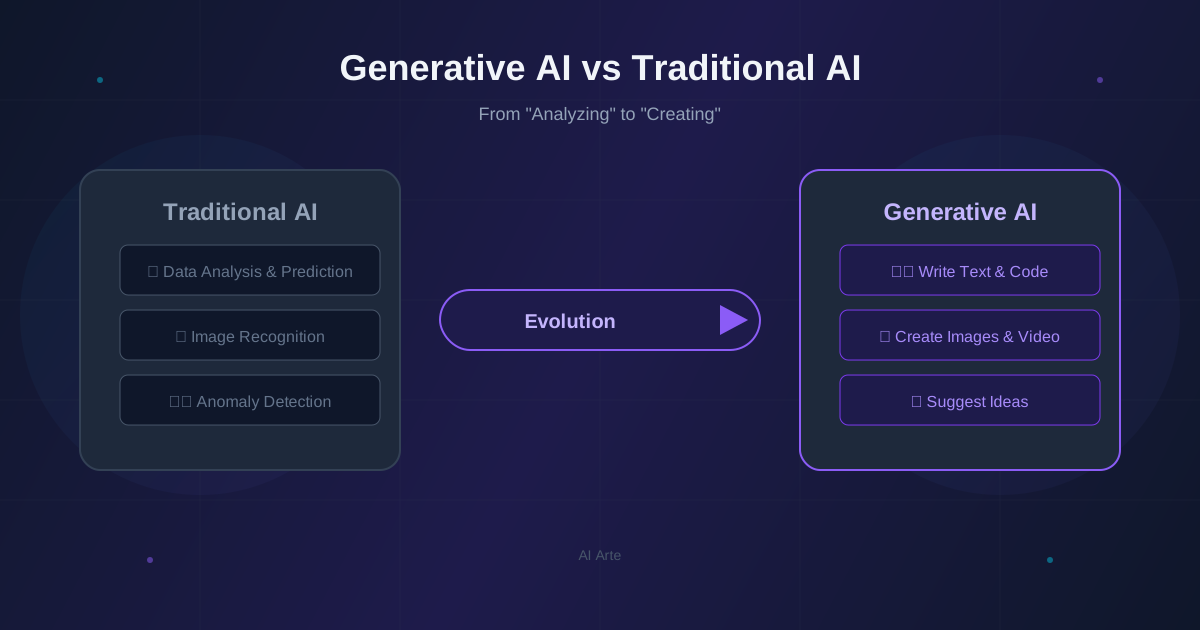
"Generative" means "able to generate" — to produce something new. While traditional AI excels at judging, classifying, and predicting, generative AI specializes in creating things that didn't exist before.
The "GPT" in ChatGPT stands for "Generative Pre-trained Transformer" — the word "Generative" is right there in the name.
How It Differs from Traditional AI
The term "AI" has been around since the 1950s, but its meaning shifted dramatically when ChatGPT launched in 2022.
Traditional AI: "Analyze and Pick an Answer"
Traditional AI's main job was to select the most appropriate answer from a predefined set of options.
- Spam filtering: Classify an email as spam or not spam
- Image recognition: Determine whether a photo contains a cat or a dog
- Demand forecasting: Predict next month's sales from historical data
- Recommendations: Suggest videos based on your watch history
All of these involve analyzing existing data and making pattern-based decisions. Nothing new is being created.
Generative AI: "Create Something from Scratch"
Generative AI, on the other hand, produces entirely new content that never existed before.
- Text generation: Draft reports and emails from scratch based on instructions
- Image generation: Create one-of-a-kind images from text descriptions
- Code generation: Write programs when told "build this feature"
- Conversation: Answer questions in natural, human-like dialogue
Side-by-Side Comparison
| Aspect | Traditional AI | Generative AI |
|---|---|---|
| Core task | Analysis, classification, prediction | Creating new content |
| Output | Numbers, labels, probabilities | Text, images, code, music |
| How you use it | Specialized interfaces, structured input | Natural language instructions (prompts) |
| Everyday examples | Spam filters, facial recognition | ChatGPT, Midjourney |
How Generative AI Works
"How can AI write essays and paint pictures?" It's a fair question. Here's a simplified explanation — no math required.
Text Generation (e.g., ChatGPT, Claude)
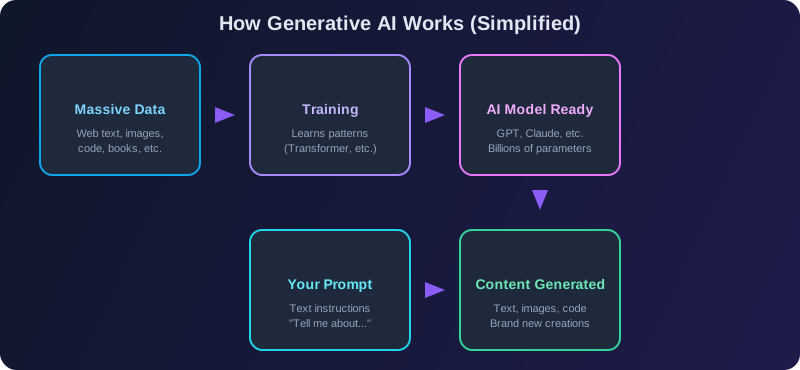
Text-based generative AI works by predicting the next word — over and over at incredible speed.
- The model is trained on enormous amounts of text data (books, web articles, research papers)
- It learns patterns like "after this word, these words tend to follow"
- When you type a prompt, it uses those patterns to generate the most likely next word, one at a time
- The result is text that reads as if a human wrote it
The breakthrough behind this is the Transformer architecture, published by a Google research team in 2017. Its key innovation was the ability to understand relationships between all words in a sentence simultaneously. Every major text-generation model today — GPT, Claude, Gemini — is built on Transformers.
Image Generation (e.g., Midjourney, Stable Diffusion)
Image generators typically use a technique called diffusion models. In simple terms:
- The model learns to gradually add noise (like static) to clean images until they become pure noise
- Then it learns to reverse the process — recovering a clean image from noise
- When you give it a text prompt, it "denoises" random static into an image matching your description
In essence, it paints a picture out of static noise.
What Generative AI Can Do
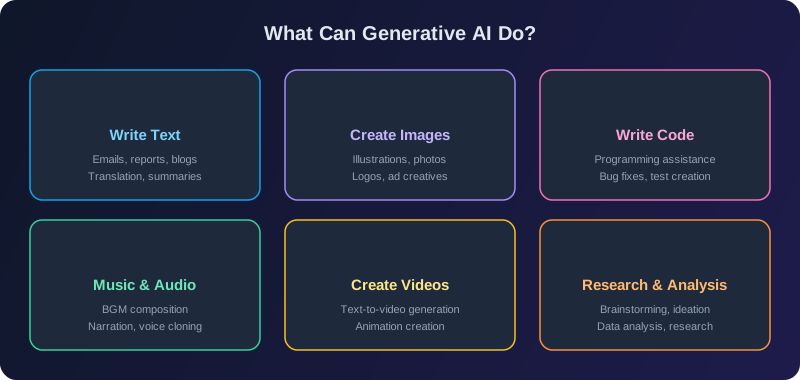
Text: A Powerful Writing Partner
Drafting emails, creating proposals, summarizing meeting notes, translating languages — AI can assist with virtually any writing task. The most practical approach is to let AI create the first draft, then refine it yourself.
Images: Democratizing Design
Since images can be generated from text descriptions alone, anyone can create visual content regardless of design skills. People are using it for social media graphics, presentation illustrations, and blog thumbnails.
Programming: Accelerating Development
You can describe the feature you want in plain language, and AI writes the code. Dedicated tools like Claude Code and Codex have emerged, and professional developers now use them daily. According to Menlo Ventures, development was the largest category of enterprise AI spending in 2025, reaching $4 billion.
Beyond: Music, Video & Research
BGM composition, text-to-video generation, research paper summarization, data analysis assistance — generative AI's reach continues to expand rapidly.
Major Generative AI Services
Here are the leading generative AI services available today.
Text Generation
| Service | Developer | Key Features |
|---|---|---|
| ChatGPT | OpenAI | The most widely known. GPT-4o supports images and voice. Free tier available |
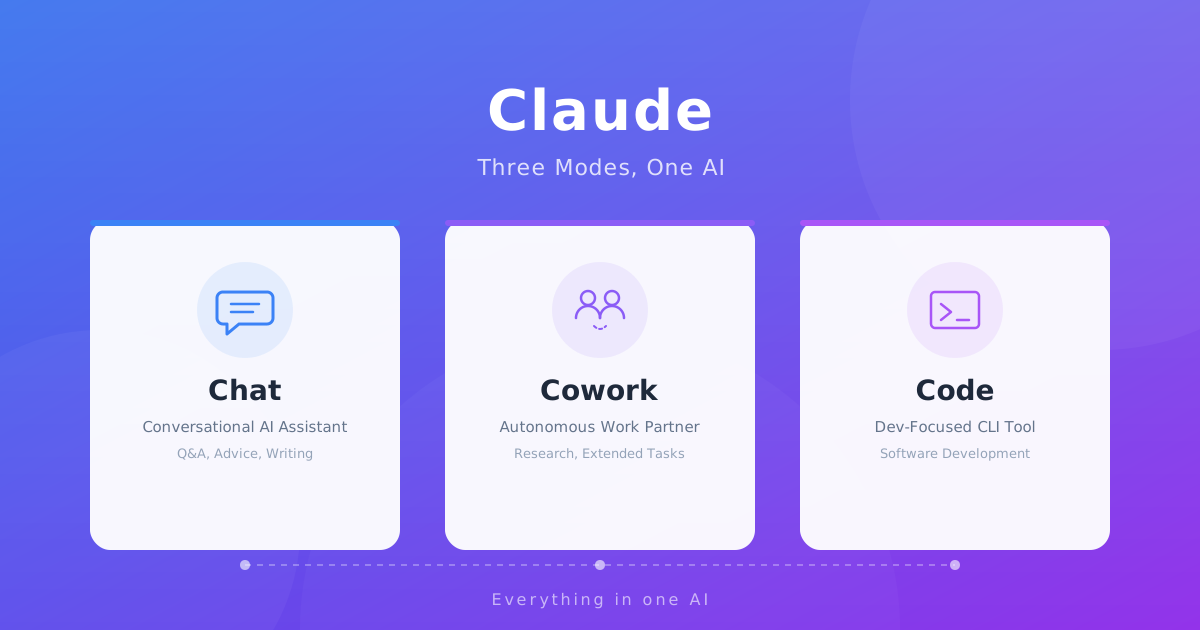
| Claude | Anthropic | Highly praised for long-context understanding and natural output. Offers three modes: Chat, Cowork, and Code |
| Gemini | Integrates with Google Search and Gmail. Strong value for money |
For a detailed pricing breakdown, see our Claude vs ChatGPT Pricing Comparison.
Image Generation
| Service | Key Features |
|---|---|
| Midjourney | Excels at artistic, high-quality image generation. Accessed via Discord |
| Stable Diffusion | Open-source. Can run locally for free. Highly customizable |
| DALL-E | Made by OpenAI. Integrated into ChatGPT for easy access |
Risks You Should Know About
Generative AI is incredibly useful, but there are important risks to understand before relying on it.
Hallucinations (Convincing Falsehoods)
Since generative AI is simply predicting the most likely next word, its output isn't guaranteed to be factual. It may cite papers that don't exist or present fabricated statistics. This phenomenon is called "hallucination."
Mitigation: Never take AI output at face value. Always verify important information against primary sources.
Copyright Concerns
Generative AI learns from vast amounts of existing content. When its output closely resembles copyrighted material, there is a risk of infringement. In the U.S., The New York Times has sued OpenAI and Microsoft over copyright issues, and legal debates continue.
Data Privacy & Confidentiality
Information you input into AI may be used as training data. Avoid pasting confidential documents or personal information directly into these tools.
Bias
Biases present in training data can surface in AI outputs. It's important not to assume AI responses are neutral or unbiased.
Summary
- Generative AI is AI that automatically creates new content — text, images, code, and more
- Traditional AI excels at analysis and prediction; generative AI excels at creation
- Technologies like Transformers and diffusion models were the key breakthroughs
- ChatGPT, Claude, Gemini, Midjourney, and more are available to use today
- Understanding risks like hallucinations, copyright, and data leaks is essential for responsible use
Used wisely, generative AI is a powerful tool that can dramatically boost your productivity in work and learning. Start with a free plan and discover how it works best for you.
Want to learn AI more systematically? Check out our free AI beginner course. Curious about your AI knowledge level? Try our AI Skills Assessment.
Frequently Asked Questions
Q. Can I use generative AI for free?
Yes. ChatGPT, Claude, and Gemini all offer free tiers. We recommend starting with a free plan and upgrading to a paid plan only if you find you need more.
Q. How accurate are generative AI responses?
Model capabilities improve every year, but no model is perfectly accurate. Breaking news and specialized numerical data are particularly prone to errors. Think of AI's answers as "a smart colleague's opinion" — always do your own final check.
Q. What's the future of generative AI?
The evolution from "conversational AI" to "autonomous AI agents" is accelerating. Whether in business or personal learning, the ability to effectively use AI will only become more important going forward.
![15 Jobs Most Likely to Be Replaced by Generative AI — And How to Future-Proof Your Career [2026]](https://az-arte.com/images/articles/ai-job-loss-featured-en.svg)
![Generative AI Knowledge Cutoff Dates Compared: ChatGPT, Claude, Gemini & More [2026]](https://az-arte.com/images/articles/ai-cutoff-featured-en.svg)